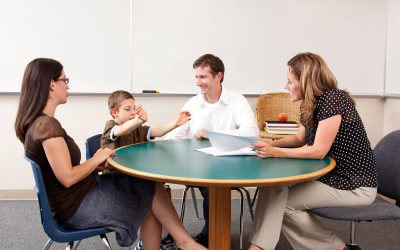
When a child is diagnosed with autism, doctors will typically prescribe Applied Behavior Analysis (ABA) therapy, speech therapy, and occupational therapy. This allows professionals in those fields to assess the child and determine whether the child needs services. It’s important for parents to understand the skills that the different therapists will focus on when working with their child.
Speech Therapy (ST)
Speech therapy for children with autism will vary depending on the needs of the child. When working with a non-verbal child, the speech therapist may introduce a form of Alternative Augmentative Communication (AAC), which may be either the Picture Exchange Communication System (PECs) or a speech output device, such as an iPad with communication software (AAC Device). If a child is able to vocalize sounds, the PECs or AAC Device should not be a substitute for speech, but should instead give the child a way to communicate while continuing to work on developing their ability to speak.
When working with a child who has some ability to speak, the speech therapist will work on receptive language, which includes understanding words, following directions, and comprehending questions. They will also work on expressive language, which involves speaking words, forming sentences, and expressing thoughts. Finally, they will work on pragmatic language, which involves conversation skills, such as turn taking and staying on topic. Social communication skills, which may also be targeted, include joint attention, non-verbal communication, perspective taking, and conversation initiation.
Occupational Therapy (OT)
Occupational Therapy for children with autism deals with fine motor skills such as being able to pick up small items or hold a pencil; gross motor skills, such as walking running, going up stairs, or kicking a ball; visual motor skills, such as being able to see a piece of food, pick it up, and put it in their mouth; and sensory issues, such as sensitivity to certain textures, sights, or tastes. Skills taught through occupational therapy may help children with autism with activities of daily living, including dressing, grooming, eating, or toileting; school readiness, such as sitting at a desk, transitioning between activities, managing a backpack, writing letters, or using scissors.
Applied Behavior Analysis Therapy (ABA)
ABA therapy focuses on the three core areas involved in the diagnosis of autism: communication, behaviors, and social interaction. Applied Behavior Analysis (ABA) therapy uses positive reinforcement to help children with autism increase language and communication, improve focus and attention, improve social skills, and reduce behavioral problems. In ABA therapy, skills are broken into smaller steps and taught to children through repeated trials, natural environment teaching, and play.
Comparison of Speech Therapy, Occupational Therapy, and ABA Therapy
Speech therapy and occupational therapy are typically approved by insurance companies for only one to two 30–45 minute sessions per week, so there will be more focus on specific skills during those sessions. In contrast, ABA therapy may be approved for up to 40 hours a week, which allows time to work on many skills.
Ideally, a child who needs speech therapy or occupational therapy should be able to receive it. However, if for some reason the child does not receive those services, ABA can still help with some of the skills typically learned in speech therapy and occupational therapy. In contrast, ABA therapy includes the larger field of behavioral skills that are not addressed in either speech or occupational therapy, so neither speech therapy nor occupational therapy can substitute for ABA therapy.
Steps to Progress provides ABA therapy and also connects parents with speech and occupational therapists who can work with their children at our clinic. Please contact us to learn more about the services that we can provide to your child with autism.