Functional Communication: Why It’s More Than Just Talking
As a parent, it’s natural to worry when your child isn’t using words to communicate. However, spoken language is only one form of communication. Many minimally verbal and nonverbal children with autism already have ways of expressing themselves; we just need to recognize and build on them. At Steps to Progress, our ABA therapy in Houston focuses on helping each child develop functional communication skills so they can share their wants, needs, and ideas.
Rather than focusing only on speech, ABA therapy helps children with autism develop communication skills that work best for their individual strengths and needs.
What Is Functional Communication?
Functional communication is any method that allows a child to successfully express themselves. For one child, that may mean saying, “I want juice.” For another, it may involve pointing to a picture, using sign language, or communicating with an AAC (Augmentative and Alternative Communication) device.
There’s no one-size-fits-all approach to communication. Instead, ABA therapy focuses on helping children participate more fully at home, school, and in the community.
How ABA Therapy Builds Communication Skills
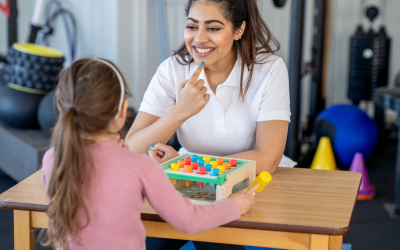
One of the primary goals of ABA therapy is helping children develop communication skills they can use in everyday life. Rather than practicing language in isolation, therapists create opportunities for children to communicate during play, daily routines, and social interactions.
Depending on each child’s goals, they may learn how to:
- Request favorite toys, foods, or activities
- Ask for help when they need it
- Make choices between two or more options
- Express feelings, discomfort, or preferences
- Let others know when they need a break
As children become more confident communicators, many families notice positive changes beyond therapy sessions. Being able to express their needs can reduce frustration, encourage a greater sense of independence, and strengthen interactions with parents, siblings, teachers, and peers.
Communication Looks Different for Every Child
Every child communicates differently, and that’s okay. Some children may develop spoken language, while others communicate through gestures, pictures, or speech-generating devices. At our Houston ABA therapy center, we meet each child where they are and build on the communication skills they already have.
Supporting Functional Communication Outside of Therapy
Encouraging and practicing communication skills doesn’t stop when a therapy session ends. Everyday routines like mealtime, playtime, and bedtime provide natural opportunities to practice communication skills. Parents and caregivers contribute to this by modeling language, offering simple choices, and celebrating every attempt to communicate.
At Steps to Progress, we believe every child deserves a way to be heard. Our individualized ABA therapy in Houston helps children gain the confidence and experience they need to better express their wants, needs, and ideas. If you’re looking for compassionate, personalized therapy, contact our team to further discuss how we can support your child and family.